


Ranthambore National Park remains one of India’s most celebrated tiger habitats and a dream destination for wildlife lovers. The latest estimates suggest that the Ranthambore landscape now supports more than 75–80 tigers, making it one of the most successful tiger conservation stories in India. Recent reports have highlighted sightings of new cubs, continued breeding success, and the dispersal of young tigers into neighboring reserves and forests.
For travelers planning a wildlife adventure, understanding the tiger population in Ranthambore 2026 provides valuable insight into why the reserve continues to attract photographers, researchers, and safari enthusiasts from around the world.
Tiger Population in Ranthambore 2026 at a Glance
| Statistic | Figure |
|---|---|
| Estimated Tiger Population | 75–80+ Tigers |
| Tiger Count in 2022 | 69 Tigers |
| Estimated Growth Since 2022 | 10–15%+ |
| Total Tiger Reserve Area | 1,334 sq km |
| Core Safari Zones | 10 |
| Famous Tiger Habitat Zones | 2, 3, 4, 5 |
| India’s Total Tiger Population | 3,682 Tigers |
Recent sightings of tigress Riddhi with cubs have further strengthened confidence in the reserve’s breeding success and ecological health.

Why Ranthambore Is One of India’s Best Tiger Reserves
Located in Sawai Madhopur, Ranthambore combines dry deciduous forests, lakes, grasslands, and ancient ruins to create an ideal habitat for Bengal tigers.
Unlike many dense forests in India, Ranthambore offers relatively open terrain, making tiger sightings more frequent and photography opportunities exceptional. This unique landscape has helped establish the park as one of the best places in India to see wild tigers.
The reserve has transformed dramatically over the past two decades. Tiger numbers that had once declined due to poaching and habitat pressures have steadily recovered thanks to improved conservation efforts, anti-poaching measures, and habitat management.
Tiger Population Growth in Ranthambore
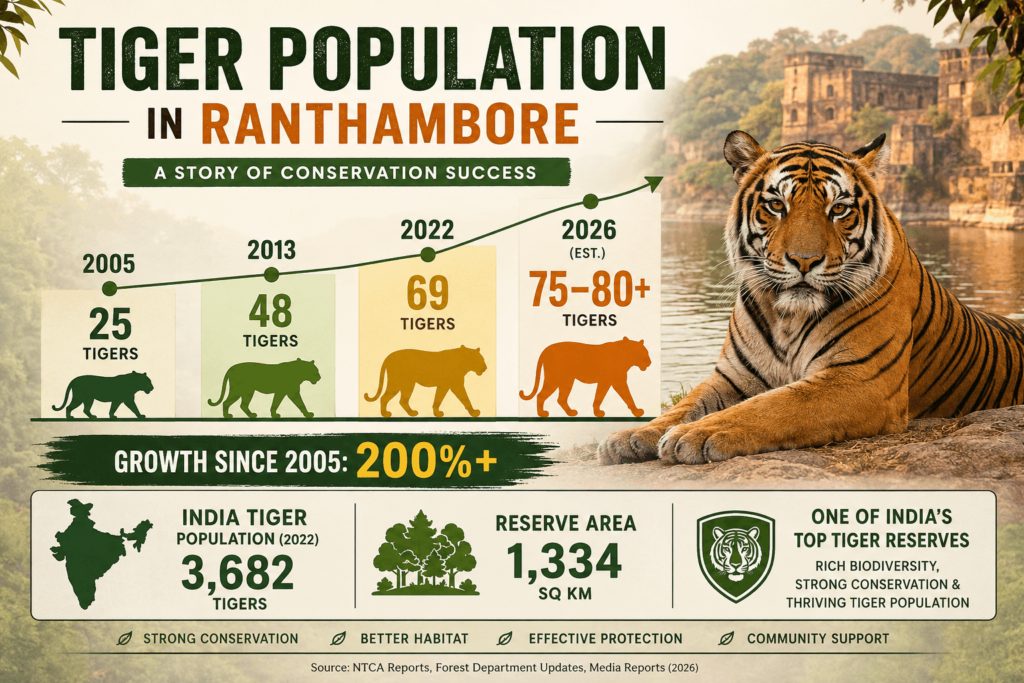
Historical Growth Trend For Tiger Population in Ranthambore 2026
| Year | Estimated Population |
|---|---|
| 2005 | 25 |
| 2013 | 48 |
| 2022 | 69 |
| 2026 | 75–80+ |
The growth trend demonstrates the success of India’s Project Tiger initiative and ongoing conservation efforts by forest authorities. Tiger numbers have nearly tripled since 2005.
Famous Tigers That Built Ranthambore’s Legacy
Ranthambore’s popularity owes much to its legendary tigers.
Machli – The Queen of Ranthambore
Perhaps the most famous tigress in the world, Machli became an international wildlife icon. She was known for her extraordinary hunting skills and was responsible for producing several generations of tigers.
Ustad (T-24)
Known for his powerful presence and dominant territory, Ustad remains one of the most discussed tigers in Ranthambore’s history.
Riddhi
One of the reserve’s current star tigresses, Riddhi recently attracted attention after being spotted with cubs, contributing to the growing tiger population.
Which Zones Have the Highest Tiger Sighting Probability?
Although tiger movement is unpredictable, some zones consistently produce better sightings.
Zone 2
Dense tiger territories, lakes, and regular sightings.
Zone 3
Home to picturesque landscapes including Rajbagh ruins and water bodies.
Zone 4
Known for breeding females and cub activity.
Zone 5
Popular among wildlife photographers.
For the best chance of spotting a tiger, visitors should secure their Ranthambore Safari Booking in advance through Ranthambhore National Parks and choose both morning and evening safaris whenever possible.
Tiger Conservation Success Story
Ranthambore’s tiger recovery reflects decades of conservation work.
Key initiatives include:
- Anti-poaching patrol units
- Camera trap monitoring
- Habitat restoration
- Community awareness programs
- Wildlife corridor protection
Rajasthan has seen significant growth in tiger numbers over the last two decades, with tigers expanding beyond Ranthambore into nearby reserves and landscapes.
Challenges Facing Ranthambore Tigers
Despite conservation success, several challenges remain.
Habitat Pressure
Growing tiger populations require larger territories.
Human-Wildlife Conflict
Dispersing tigers occasionally move into nearby villages and agricultural areas.
Genetic Diversity
Experts continue monitoring genetic health due to the reserve’s historically isolated population.
Tourism Management
Balancing conservation and tourism remains an ongoing priority.
How Tiger Population Growth Benefits Tourism
Increasing tiger numbers have significantly boosted wildlife tourism in Ranthambore.
Benefits include:
- Higher tiger sighting probability
- Increased tourism revenue
- Local employment opportunities
- Better conservation funding
- Growth in eco-tourism infrastructure
Today, Ranthambore attracts thousands of visitors annually, making safari tourism one of the region’s most important economic drivers.
Best Time to See Tigers in Ranthambore
October to February
Pleasant weather and excellent wildlife viewing.
March to May
Highest probability of tiger sightings near water sources.
June
Excellent photography opportunities before monsoon closure.
Many wildlife photographers consider April and May the most rewarding months for tiger sightings despite warmer temperatures.
Why Choose Ranthambhore National Parks for Safari Booking?
A successful wildlife adventure begins with a reliable booking partner. At Ranthambhore National Parks, we help travelers secure hassle-free safari reservations while providing accurate information about zones, safari timings, and wildlife experiences.
✅ Easy Online Safari Booking
Book your preferred safari dates in just a few clicks. Our streamlined booking process helps visitors avoid last-minute availability issues, especially during peak travel seasons.
✅ Expert Guidance on Safari Zones
Not sure which safari option to choose? Our team provides guidance on safari types, timings, and zone allocation procedures to help you plan a memorable wildlife experience.
✅ Trusted Information Source
Beyond bookings, we regularly publish wildlife guides, safari updates, travel tips, and conservation-related content to help visitors make informed decisions before their trip.









Ranthambore on 14th June and did two safaris booked by Shabaz Khan, who guided us very well and helped choose the right zone. Morning safari in Zone 1 (6:30–9:30 AM) was disappointing as we didn’t spot any tiger. But the evening safari in Zone 4 (3–6 PM) was amazing — saw 3 tigers and had a great experience. Thanks to Shabaz for the smooth booking and right guidance. Highly recommend Zone 4.


We had the best tiger safari tour in Ranthambore and spotted 4 majestic tigers in Zone 3. The jungle was full of thrilling moments and our guide made the trip even better with his deep knowledge. If you’re planning a Ranthambore jungle safari, I highly recommend this adventure tour. Everything from booking to the actual gypsy safari was smooth and well-managed. Perfect for wildlife lovers and nature photographers. 🐅✨"

We had an amazing experience in morning and evening safari.
✅ Secure & Transparent Process
We maintain a transparent booking process with clear information regarding safari fees, government regulations, and required visitor details.
✅ Support for Domestic & International Travelers
Whether you’re visiting from another state in India or traveling from overseas, our team helps simplify the safari booking process and answers common travel-related queries.
✅ Complete Ranthambore Travel Assistance
From Ranthambore Safari Booking and safari timing information to travel tips and wildlife guides, we aim to be your one-stop resource for planning a successful Ranthambore adventure.
Experience the Wild Like Never Before
With a growing tiger population, thriving wildlife, and some of India’s most exciting safari experiences, there has never been a better time to explore Ranthambore. Secure your Ranthambore Safari Booking early through Ranthambhore National Parks and increase your chances of witnessing the majestic Royal Bengal Tiger in its natural habitat.
Frequently Asked Questions
1. How many tigers are in Ranthambore in 2026?
Recent estimates indicate more than 75–80 tigers in the Ranthambore landscape.
2. Is Ranthambore good for tiger sightings?
Yes, it is considered one of India’s best tiger reserves for sightings.
3. Which zone is best for tiger sightings?
Zones 2, 3, and 4 are traditionally considered excellent for tiger sightings.
4. What is the latest tiger count in Ranthambore?
Recent reports place the population around 77 tigers with new cub sightings as tiger population in ranthambore 2026.
5. Who was Machli?
Machli was the most famous tigress in Ranthambore and a global wildlife icon.
6. Can I guarantee a tiger sighting?
No, tiger sightings are never guaranteed in a wild habitat.
7. What is the best month for tiger sightings?
April and May often provide excellent sighting opportunities.
8. How many safari zones are there?
Ranthambore currently operates 10 safari zones.
9. Is tiger population increasing?
Yes, tiger numbers have shown strong growth over the past two decades.
10. How large is Ranthambore Tiger Reserve?
The reserve covers approximately 1,334 square kilometers.
11. Are cub sightings common?
Cub sightings occur regularly when breeding females occupy safari zones.
12. What animals can be seen besides tigers?
Leopards, sloth bears, crocodiles, deer, hyenas, and hundreds of bird species.
13. How early should I book a safari?
At least 60–90 days before travel during peak season.
14. Is Ranthambore open throughout the year?
Most tourism zones operate from October to June.
15. Where can I book a Ranthambore safari?
You can book online through us, as we are trusted travel partner registerd with authorities and provide you seamless expereince.