


Winter is widely regarded as one of the best seasons to experience the incredible wilderness of Ranthambore National Park. From October to February, the park transforms into a paradise for wildlife lovers, photographers, birdwatchers, and families looking for an unforgettable adventure.
Pleasant temperatures, clear skies, lush post-monsoon landscapes, and comfortable safari conditions make winter the peak tourism season in Ranthambore. Whether your dream is spotting the majestic Royal Bengal Tiger, photographing ancient ruins, or simply enjoying nature, a ranthambore safari in winter offers an unforgettable experience.
With an estimated 75–80+ Royal Bengal Tigers, over 300 bird species, 10 safari zones, and a protected area of 1,334 sq km, Ranthambore remains one of India’s premier wildlife destinations.
To secure your preferred safari, complete your Ranthambore Safari Booking in advance through us.
Why Visit Ranthambore in Winter?
Winter offers the perfect combination of comfortable weather and excellent wildlife viewing.
Unlike the hot summer months, visitors can enjoy longer outdoor activities without extreme temperatures.
Benefits of Winter Safari
✔ Pleasant weather
✔ Comfortable morning and evening safaris
✔ Beautiful sunrise landscapes
✔ Excellent wildlife photography
✔ Rich birdlife
✔ Family-friendly travel
✔ Ideal for first-time visitors
This is also the busiest season, so advance safari booking is highly recommended.
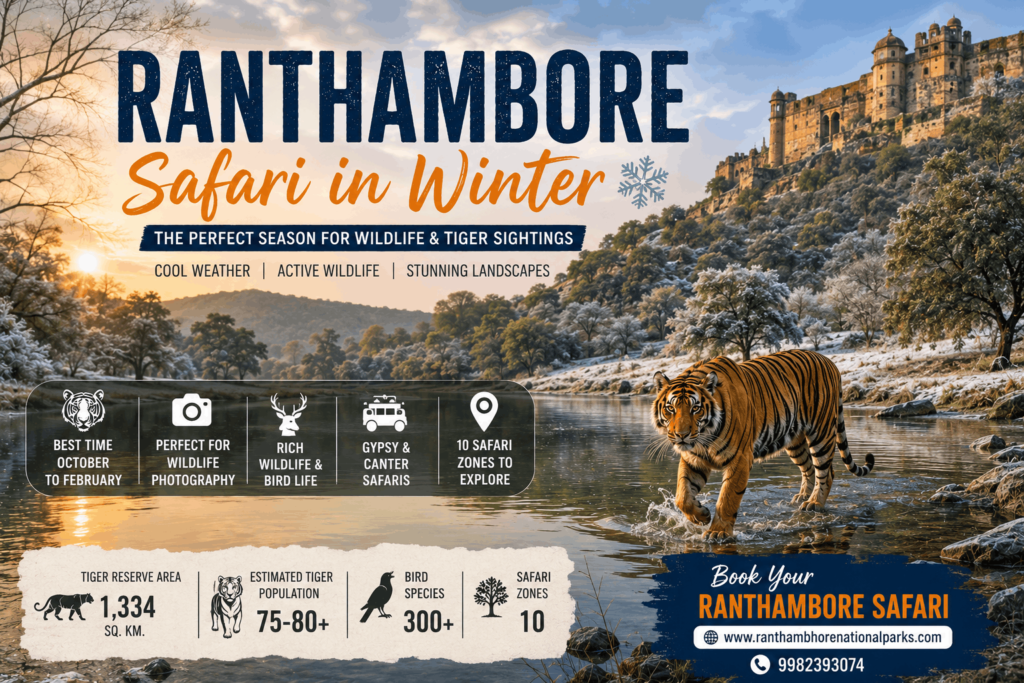

Ranthambore Safari in Winter at a Glance
| Information | Details |
| Winter Season | October–February |
| Temperature | Approximately 8°C–30°C |
| Tiger Reserve Area | 1,334 sq km |
| Estimated Tiger Population | 75–80+ |
| Safari Zones | 10 |
| Bird Species | 300+ |
| Safari Sessions | Morning & Evening |
Weather During Winter
Winter mornings in Ranthambore are cool and refreshing, while afternoons remain pleasant.
October
- Fresh greenery after the monsoon
- Comfortable weather
- Excellent scenery
November
- Clear skies
- Mild temperatures
- Peak birdwatching season
December
- Cold mornings
- Pleasant afternoons
- High tourist demand
January
- Coolest month
- Misty mornings
- Beautiful golden-hour photography
February
- Comfortable temperatures
- Increasing wildlife activity
- Ideal safari conditions
Wildlife Activity During Winter
Winter is one of the most rewarding seasons for wildlife observation.
Animals remain active throughout the day because temperatures are moderate.
Visitors frequently encounter:
Mammals
- Royal Bengal Tiger
- Leopard
- Sloth Bear
- Nilgai
- Sambar Deer
- Chital
- Wild Boar
- Jackal
Birds
Winter also attracts migratory birds, making Ranthambore a paradise for birdwatchers.
Common sightings include:
- Kingfishers
- Painted Storks
- Eagles
- Herons
- Owls
- Peacocks
- Cormorants
Tiger Sighting Opportunities
Although tiger sightings can never be guaranteed, winter provides excellent opportunities due to comfortable weather and active wildlife.
Many visitors witness tigers:
- Walking on safari tracks
- Resting in open grasslands
- Drinking at lakes
- Patrolling territories
- Hunting near water sources
Some of the most photographed locations include:
- Padam Talao
- Rajbagh Talao
- Rajbagh Ruins
- Zone 3 forest tracks
Best Safari Zones in Winter
All safari zones offer unique wildlife experiences, but several zones are especially popular during winter.
Zone 2
Known for scenic landscapes and excellent wildlife movement.
Zone 3
One of the most famous zones featuring Padam Talao, Rajbagh Talao, Jogi Mahal, and Rajbagh Ruins.
Zone 4
Dense forest habitat with regular wildlife activity.
Zone 5
Popular among returning visitors due to diverse landscapes and wildlife.
Remember that safari zones are allocated according to Forest Department rules and availability.
Winter Safari Timings
Safari timings vary slightly throughout the season.
Morning Safari
Approximately 6:30 AM – 10:00 AM
Morning drives provide cool temperatures, soft lighting, and active wildlife.
Evening Safari
Approximately 2:30 PM – 5:30 PM
Evening safaris are ideal for sunset photography and observing animals as temperatures begin to cool.
What to Wear During a Winter Safari
Packing the right clothing helps you stay comfortable throughout your safari.
Recommended Clothing
✔ Light jacket
✔ Warm sweatshirt for early mornings
✔ Neutral-colored shirts
✔ Comfortable trousers
✔ Walking shoes
✔ Cap or woollen hat
Avoid bright colors that may disturb wildlife.
Winter Safari Photography Tips
Winter offers some of the year’s best natural lighting.
For excellent photographs:
- Carry a telephoto lens (300mm or longer)
- Choose morning safaris for golden light
- Keep your camera ready at all times
- Respect wildlife and maintain silence
- Photograph landscapes as well as animals
The combination of misty mornings, ancient ruins, and reflective lakes creates stunning compositions that attract photographers from around the world.
Suggested 3-Day Winter Safari Itinerary
Winter is the perfect season to enjoy multiple safaris and explore Ranthambore at a relaxed pace.
Day 1 – Arrival & Relaxation
- Arrive at Sawai Madhopur
- Check into your wildlife resort
- Explore the local market
- Enjoy a traditional Rajasthani dinner
Day 2 – Wildlife Adventure
- Morning Gypsy Safari
- Visit Ranthambore Fort
- Lunch at the resort
- Evening Safari
- Wildlife photography session
Day 3 – Nature & Departure
- Morning birdwatching
- Leisure breakfast
- Souvenir shopping
- Departure
This itinerary is ideal for families, couples, photographers, and wildlife enthusiasts.
Ranthambore Safari in Winter Travel Tips
Book Your Ranthambore Safari in Winter Early
October to February is the busiest season. Booking in advance improves your chances of securing your preferred safari date and vehicle.
Stay Warm During Morning Safaris
Carry a light jacket or fleece as early mornings can be chilly.
Choose Multiple Safaris
Wildlife movement varies daily, so booking two or more safari drives increases your chances of memorable sightings.
Carry Essential Items
- Camera
- Binoculars
- Sunglasses
- Sunscreen
- Water bottle
- Personal medicines
Respect Wildlife
Avoid loud noises, remain seated in the vehicle, and follow all instructions from your guide and forest officials.
Winter Safari for Families & Couples
Ranthambore is one of Rajasthan’s most family-friendly wildlife destinations.
Families
Children enjoy spotting deer, crocodiles, birds, and, if lucky, tigers in their natural habitat. Comfortable winter weather also makes safaris more enjoyable for senior citizens.
Couples
The peaceful landscapes, golden sunrises, scenic lakes, and luxurious jungle resorts make Ranthambore a memorable winter getaway for couples.
Why Choose Ranthambhore National Parks?
Planning a winter safari should be simple, secure, and stress-free.
At Ranthambhore National Parks, we assist travelers with reliable safari bookings and helpful travel guidance.
Why Book With Us?
✔ Easy online safari booking
✔ Secure payment process
✔ Dedicated customer support
✔ Updated safari availability
✔ Gypsy & Canter booking assistance
✔ Helpful travel guides
✔ Support for Indian and international visitors
👉 Book Your Online Ranthambore Safari









Ranthambore on 14th June and did two safaris booked by Shabaz Khan, who guided us very well and helped choose the right zone. Morning safari in Zone 1 (6:30–9:30 AM) was disappointing as we didn’t spot any tiger. But the evening safari in Zone 4 (3–6 PM) was amazing — saw 3 tigers and had a great experience. Thanks to Shabaz for the smooth booking and right guidance. Highly recommend Zone 4.


We had the best tiger safari tour in Ranthambore and spotted 4 majestic tigers in Zone 3. The jungle was full of thrilling moments and our guide made the trip even better with his deep knowledge. If you’re planning a Ranthambore jungle safari, I highly recommend this adventure tour. Everything from booking to the actual gypsy safari was smooth and well-managed. Perfect for wildlife lovers and nature photographers. 🐅✨"

We had an amazing experience in morning and evening safari.
Winter Wildlife Facts
| Category | Information |
| Tiger Reserve Area | 1,334 sq km |
| Estimated Tiger Population | 75–80+ |
| Safari Zones | 10 |
| Bird Species | 300+ |
| Winter Season | October–February |
| Morning Temperature | Around 8–15°C |
| Peak Tourist Months | November–January |
These facts explain why winter remains one of the most popular times to visit Ranthambore.
Responsible Wildlife Tourism
Every visitor contributes to wildlife conservation.
While enjoying your safari:
- Do not litter.
- Stay inside the safari vehicle.
- Avoid feeding animals.
- Maintain silence.
- Respect nature and fellow visitors.
- Follow all forest department regulations.
Responsible tourism helps preserve Ranthambore’s unique ecosystem for future generations.
A winter safari in Ranthambore offers the perfect combination of pleasant weather, beautiful landscapes, active wildlife, and unforgettable tiger sightings. Whether you’re traveling with family, friends, or as a wildlife photographer, the cooler months provide ideal conditions to explore one of India’s most celebrated national parks.
Book your safari in advance, prepare for early morning adventures, and immerse yourself in the incredible biodiversity that makes Ranthambore a world-famous wildlife destination.
Frequently Asked Questions on Ranthambore Safari in Winter
1. Is winter the best time to visit Ranthambore?
Yes, ranthambore safari in winter is the best time to visit. October to February offers pleasant weather and excellent safari conditions.
2. Can I see tigers during winter?
Tiger sightings are never guaranteed, but winter is considered a very good season for wildlife viewing.
3. What should I wear?
Wear neutral-colored clothing and carry a light jacket for morning safaris.
4. Which safari is better?
Gypsy Safari is ideal for families and photographers, while Canter Safari suits larger groups.
5. Are winter safaris crowded?
Yes. Winter is the peak tourist season, so advance booking is recommended.
6. Which zones are most popular?
Zones 2, 3, 4, and 5 are among the most visited.
7. Is Ranthambore suitable for children?
Yes. Winter weather makes it especially comfortable for families.
8. How many safaris should I book?
Booking two or three safaris improves your chances of wildlife sightings.
9. Is photography allowed?
Yes. Photography is permitted during authorized safari drives.
10. Are birds active in winter?
Yes. Winter is one of the best seasons for birdwatching due to resident and migratory species.
11. How cold does it get?
Morning temperatures may drop to around 8°C, while afternoons are generally pleasant.
12. What are the safari timings?
Morning and evening safari timings vary slightly depending on the season.
13. Is winter suitable for senior citizens?
Yes. Comfortable daytime temperatures make it an excellent season for visitors of all ages.
14. Why should I book early?
Winter is the busiest season, and safari permits often sell out well in advance.