


Ranthambore National Park is one of India’s most iconic wildlife destinations, attracting thousands of visitors every year who hope to witness the majestic Royal Bengal Tiger in its natural habitat. With an estimated 75–80+ tigers spread across the 1,334 sq km Ranthambore Tiger Reserve, the park remains one of the most successful tiger conservation landscapes in the country.
One of the most common questions travelers ask before booking a safari is, “Which zone has the highest chances of spotting a tiger this month?” While tiger sightings can never be guaranteed because these magnificent animals roam freely, understanding recent movement patterns, active territories, and seasonal wildlife behavior can help visitors make informed decisions.
Our Ranthambore Monthly Tiger Tracking Report is designed to provide a reliable overview of tiger activity based on recent safari observations, forest guide feedback, and seasonal wildlife trends. Rather than predicting exact tiger locations, this report highlights zones that have shown consistent activity, helping wildlife enthusiasts and photographers plan a more rewarding safari experience.
If you’re planning a wildlife adventure, don’t forget to complete your Ranthambore Safari Booking in advance through us to secure your preferred safari dates.
Ranthambore at a Glance
| Information | Details |
|---|---|
| Tiger Reserve Area | 1,334 sq km |
| Estimated Tiger Population | 75–80+ Tigers |
| Core Safari Zones | 10 |
| Best Safari Season | October to June |
| Morning & Evening Safaris | Available |
| Bird Species | 300+ |
| Famous Tigers | Riddhi, Arrowhead, Noor, Sultan & Others |

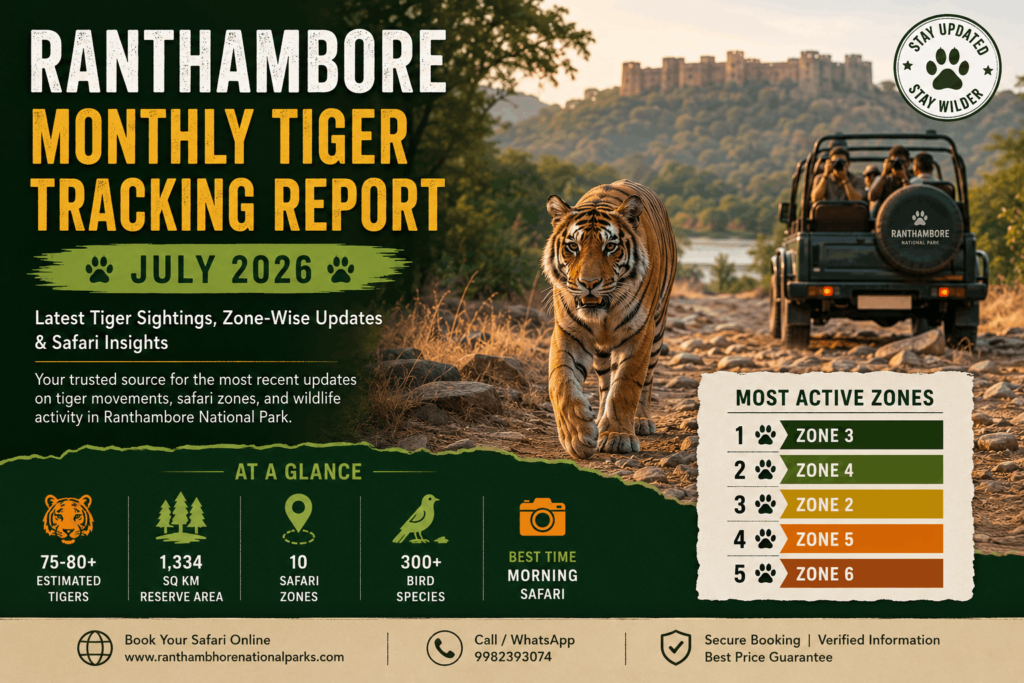
July 2026 Wildlife Highlights
July marks the transition toward the monsoon season, and although tourism operations are affected by seasonal closures in many core areas, the month’s tracking data provides valuable insights into tiger territories observed during the active safari period leading into the rains.
Key observations include:
- Strong tiger movement continued around permanent water sources.
- Female tigers with sub-adult cubs were frequently reported in established territories.
- Several dominant males maintained territorial patrols along traditional routes.
- Herbivore activity remained high around grasslands, supporting healthy predator movement.
- Buffer zones continued to record encouraging wildlife activity, highlighting the expanding tiger landscape.
These trends demonstrate the remarkable success of tiger conservation in Ranthambore, where the population has grown steadily over the last two decades.
Understanding Tiger Movement
Unlike zoo animals, wild tigers are constantly on the move. Their daily routes depend on several natural factors, including:
Water Availability
During warmer months, lakes, streams, and natural waterholes become key gathering points for both prey and predators. Tigers are often observed visiting these areas during the early morning or late afternoon.
Territory Protection
Adult male tigers regularly patrol their territories to mark boundaries and deter rivals, while female tigers remain close to areas offering sufficient prey and shelter for cubs.
Seasonal Behavior
Tiger movement changes throughout the year based on weather conditions, breeding cycles, and prey availability. This is why safari reports differ from month to month.









Ranthambore on 14th June and did two safaris booked by Shabaz Khan, who guided us very well and helped choose the right zone. Morning safari in Zone 1 (6:30–9:30 AM) was disappointing as we didn’t spot any tiger. But the evening safari in Zone 4 (3–6 PM) was amazing — saw 3 tigers and had a great experience. Thanks to Shabaz for the smooth booking and right guidance. Highly recommend Zone 4.


We had the best tiger safari tour in Ranthambore and spotted 4 majestic tigers in Zone 3. The jungle was full of thrilling moments and our guide made the trip even better with his deep knowledge. If you’re planning a Ranthambore jungle safari, I highly recommend this adventure tour. Everything from booking to the actual gypsy safari was smooth and well-managed. Perfect for wildlife lovers and nature photographers. 🐅✨"

We had an amazing experience in morning and evening safari.
Zone-Wise Ranthambore Monthly Tiger Tracking Report
Zone 2 – High Activity
Zone 2 continues to be one of Ranthambore’s most productive safari zones. With numerous water bodies and open landscapes, it frequently attracts herbivores, making it a favorable hunting ground for tigers.
Highlights
- Consistent predator movement
- Excellent early morning sightings
- Good opportunities for wildlife photography
- Healthy prey population
Visitors often report memorable encounters with resident tigers in this zone.
Zone 3 – Very High Activity
Zone 3 remains among the most sought-after safari zones in Ranthambore. Famous for Rajbagh Ruins and Padam Talao, this zone combines spectacular scenery with excellent wildlife viewing.
Why Zone 3 Performs Well
- Dense tiger territories
- Permanent water sources
- Historic ruins that attract photographers
- Frequent movement of resident tigresses
Many experienced guides consider Zone 3 one of the park’s most reliable tiger habitats.
Zone 4 – Very High Activity
Zone 4 continues to produce excellent wildlife encounters thanks to its balanced ecosystem of forests, grasslands, and water sources.
Visitors have reported:
- Adult tiger sightings
- Family groups
- Leopard movement
- Sambar deer
- Marsh crocodiles
This zone is particularly attractive to photographers because of its varied landscapes and rich biodiversity.
Zone 5 – High Activity
Zone 5 has become increasingly popular in recent years as tiger territories continue to expand.
Key features include:
- Scenic forest tracks
- Less crowded safari routes
- Active wildlife movement
- Excellent birdwatching opportunities
Many visitors appreciate the peaceful atmosphere and diverse wildlife found here.
Buffer Zones (6–10)
Although traditionally overshadowed by the core zones, buffer areas have shown encouraging wildlife activity.
Recent observations suggest:
- Increasing tiger dispersal
- Healthy herbivore populations
- Lower safari traffic
- Better opportunities for exclusive wildlife experiences
As Ranthambore’s tiger population grows, these zones are expected to play an increasingly important role in conservation and tourism.
Famous Tigers Frequently Reported
Ranthambore is home to several well-known tigers that have become icons among wildlife enthusiasts.
Riddhi
Known for successfully raising multiple litters, Riddhi is one of the reserve’s most photographed tigresses and a symbol of successful breeding.
Arrowhead
Named for the distinctive arrow-shaped marking on her forehead, Arrowhead gained international attention for her remarkable hunting skills and lineage.
Noor
Noor is frequently observed within her territory and has become a favorite subject for wildlife photographers due to her calm demeanor.
Sultan
This powerful male tiger is recognized for patrolling extensive territories and displaying classic territorial behavior.
Every safari offers a unique experience, and while these famous tigers are regularly documented, sightings always depend on their natural movements.
Wildlife Beyond Tigers
Although tigers are the primary attraction, Ranthambore offers an incredible diversity of wildlife.
Visitors may also encounter:
- Leopards
- Sloth Bears
- Striped Hyenas
- Nilgai
- Sambar Deer
- Chital
- Wild Boar
- Marsh Crocodiles
- Indian Foxes
- More than 300 species of birds
This rich biodiversity makes every safari exciting, even when tigers remain elusive.
Best Time for Tiger Sightings Based on Monthly Tracking
One of the most common questions among wildlife enthusiasts is, “What is the best time to spot a tiger in Ranthambore?” While there is no guaranteed answer, years of safari observations indicate that tiger activity is influenced by weather, temperature, water availability, and prey movement.
Morning Safari (Recommended)
Morning safaris generally provide the highest chances of wildlife activity because temperatures are cooler and predators remain active after nighttime hunting.
Advantages of Morning Safari
- Cooler temperatures
- Fresh pugmarks help guides track movement
- Better chances of spotting tigers near waterholes
- Excellent natural light for photography
- Active birdlife
Evening Safari
Evening safaris offer a completely different experience.
Advantages
- Beautiful golden-hour photography
- Comfortable weather during winter
- Active herbivore movement
- Scenic sunset views across the forest
Many experienced wildlife photographers recommend booking both morning and evening safaris to maximize wildlife encounters.
Best Months for Tiger Sightings
Although Ranthambore remains one of India’s best tiger reserves throughout the tourism season, sighting probabilities vary.
| Season | Wildlife Experience |
|---|---|
| October–November | Pleasant weather, lush landscapes |
| December–February | Cool climate, excellent birdwatching |
| March | Increasing tiger activity |
| April | Excellent tiger sightings |
| May | Highest tiger sighting probability |
| June | Great photography before monsoon closure |
During summer, animals gather around permanent water sources, increasing the chances of memorable sightings.
Wildlife Photography Tips
Ranthambore is a paradise for wildlife photographers.
Carry the Right Equipment
Recommended gear:
- DSLR or mirrorless camera
- 300–600 mm telephoto lens
- Extra batteries
- Memory cards
- Lens cleaning kit
Camera Settings
- Fast shutter speed
- Continuous autofocus
- Burst mode
- Auto ISO where appropriate
Respect Wildlife
Avoid sudden movements or loud noises. Responsible photography ensures minimal disturbance to animals and enhances the safari experience for everyone.
Safari Etiquette
Following park rules helps protect wildlife and ensures a safe experience.
Do
✔ Follow your guide’s instructions.
✔ Remain seated during the safari.
✔ Speak quietly.
✔ Respect wildlife.
✔ Carry reusable water bottles.
Don’t
✘ Feed animals.
✘ Play loud music.
✘ Throw plastic waste.
✘ Attempt to attract wildlife.
✘ Leave designated safari vehicles.
Monthly Safari Planning Checklist
Before arriving at Ranthambore:
- Confirm safari permit
- Carry valid government ID
- Reach the gate 30 minutes early
- Wear comfortable neutral-colored clothing
- Carry binoculars
- Bring sunscreen and a hat
- Keep your camera fully charged
Proper planning greatly improves your safari experience.
Why Choose Ranthambhore National Parks for Safari Booking?
Planning a tiger safari should be exciting—not stressful. At Ranthambhore National Parks, we make the booking process simple while providing reliable information to help you prepare for your wildlife adventure.
Why Thousands of Visitors Trust Us
✔ Easy Online Booking
Reserve your safari in just a few simple steps.
✔ Updated Safari Information
We regularly publish wildlife guides, safari updates, travel tips, and conservation news.
✔ Expert Assistance
Our experienced support team helps you understand safari options, documentation requirements, and travel planning.
✔ Secure Booking Process
Transparent pricing and secure booking procedures ensure peace of mind.
✔ Support for Indian & International Travelers
Whether you’re visiting from another state or another country, our team assists throughout the booking process.
✔ Complete Travel Resources
Beyond safari reservations, we provide detailed information about:
- Tiger sightings
- Safari zones
- Hotels
- Travel routes
- Photography tips
- Wildlife guides
👉 Book Your Ranthambore Safari Today
https://ranthambhorenationalparks.com/
Monthly Tiger Tracking Statistics – Ranthambore Wildlife Snapshot
| Category | Statistics |
|---|---|
| Estimated Tiger Population | 75–80+ |
| Tiger Reserve Area | 1,334 sq km |
| Safari Zones | 10 |
| Bird Species | 300+ |
| Leopard Population | Healthy & Stable |
| Safari Season | October–June |
Highest Activity Zones This Month
🥇 Zone 3
🥈 Zone 4
🥉 Zone 2
⭐ Zone 5
⭐ Zone 6
These rankings are based on recent sighting trends and may change as tiger territories naturally shift.
Conservation Success Story
Ranthambore is one of India’s greatest wildlife conservation success stories.
From an estimated 25 tigers in 2005 to 75–80+ tigers in 2026, the reserve has demonstrated remarkable population growth.
This success is the result of:
- Project Tiger initiatives
- Anti-poaching measures
- Habitat restoration
- Community participation
- Scientific monitoring
- Responsible wildlife tourism
Every safari booking contributes indirectly to conservation awareness and local livelihoods.
Final Thoughts
Every safari in Ranthambore is unique. Some visitors witness multiple tiger sightings, while others leave with unforgettable memories of leopards, sloth bears, crocodiles, and vibrant birdlife.
The purpose of this Monthly Tiger Tracking Report is to help travelers understand recent wildlife trends—not to predict guaranteed sightings.
For the best experience:
- Plan multiple safaris.
- Book in advance.
- Visit during the recommended season.
- Respect wildlife and forest regulations.
Whether you’re a wildlife photographer, nature lover, or first-time traveler, Ranthambore offers an unforgettable opportunity to experience one of India’s most extraordinary tiger landscapes.
Frequently Asked Questions on Ranthambore Monthly Tiger Tracking Report
1. What is a Monthly Tiger Tracking Report?
A monthly summary of recent tiger movement, sighting trends, and safari observations across Ranthambore.
2. Does this report guarantee tiger sightings?
No. Tigers are wild animals, and sightings can never be guaranteed.
3. Which zones had the highest activity this month?
Zones 3, 4, 2, 5, and 6 showed encouraging activity based on recent observations.
4. Which safari is better—morning or evening?
Morning safaris generally offer better wildlife activity, while evening safaris provide beautiful lighting and landscapes.
5. What is the best month for tiger sightings?
April and May usually provide the highest probability of sightings.
6. How many safari zones are there?
Ranthambore currently operates 10 safari zones.
7. Which famous tigers live in Ranthambore?
Riddhi, Arrowhead, Noor, Sultan, and several other resident tigers are well known among visitors.
8. How many tigers are estimated in Ranthambore?
The current landscape is estimated to support 75–80+ tigers.
9. How early should I book my safari?
Book at least 60–90 days in advance during peak travel months.
10. What should I wear during a safari?
Choose neutral-colored clothing such as olive green, brown, or beige.
11. Is photography allowed?
Yes. Wildlife photography is encouraged while following park guidelines.
12. Can I choose my safari zone?
Zone allocation is managed by the Forest Department and depends on availability.
13. How many safaris should I book?
Booking 2–3 safaris significantly improves your chances of spotting a tiger.
14. Are buffer zones worth visiting?
Yes. Buffer zones have produced increasingly rewarding wildlife sightings in recent years.
15. Where can I book a Ranthambore safari?
You can complete your Ranthambore Safari Booking through us.