


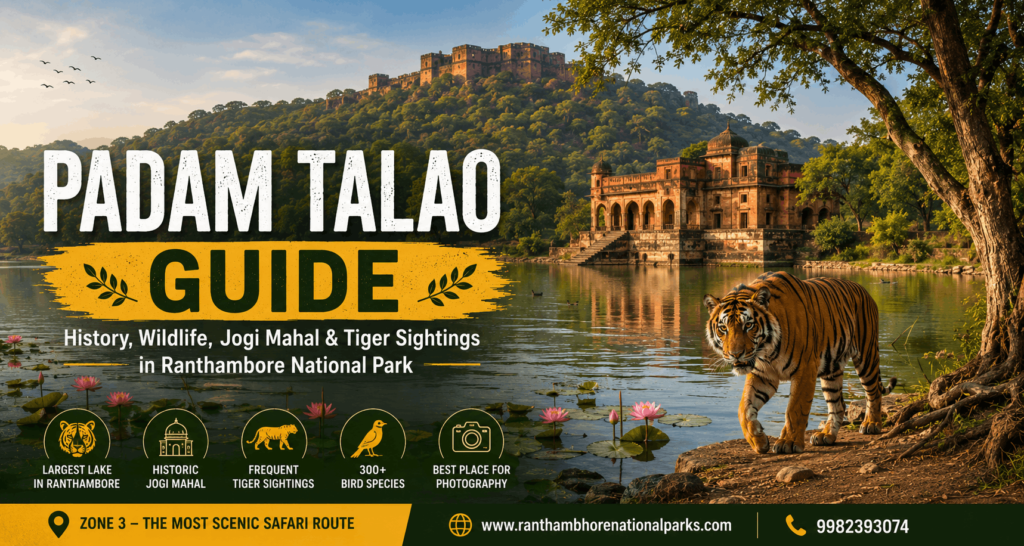
Nestled in the heart of Ranthambore National Park, Padam Talao is one of the most iconic attractions inside the reserve. Famous for its breathtaking scenery, abundant wildlife, and frequent tiger sightings, the lake has become a favorite destination for wildlife photographers, birdwatchers, and nature enthusiasts from around the world.
As the largest lake in Ranthambore, Padam Talao plays a vital role in supporting the park’s rich ecosystem. During every season, countless animals gather around its banks, making it one of the best places to witness the incredible biodiversity of Rajasthan.
Whether you’re planning your first safari or returning for another adventure, this article covers everything about Padam Talao Guide—from its history and wildlife to photography tips and the best time to visit.
If you’re planning your trip, complete your Ranthambore Safari Booking in advance through us to secure your preferred safari dates.
Padam Talao Guide at a Glance
| Information | Details |
|---|---|
| Location | Ranthambore National Park |
| State | Rajasthan |
| Largest Lake in Park | Yes |
| Nearby Landmark | Jogi Mahal |
| Best Safari Zones | Zone 3 |
| Famous For | Tiger Sightings, Wildlife, Photography |
| Best Time to Visit | October–June |

What is Padam Talao?
Padam Talao is the largest and one of the oldest lakes inside Ranthambore National Park. Surrounded by ancient trees, rocky hills, and historic ruins, it creates one of the most picturesque landscapes in the reserve.
The lake gets its name from the abundance of lotus flowers (“Padam”) that bloom on its surface during favorable seasons.
Today, Padam Talao serves as a critical water source for countless species of wildlife, especially during the dry summer months.
Why is Padam Talao So Famous?
Padam Talao has gained international recognition because it offers one of the highest chances of witnessing wildlife in natural surroundings.
Some reasons for its popularity include:
✔ Largest lake inside Ranthambore
✔ Home to diverse wildlife
✔ Frequent tiger sightings
✔ Historic Jogi Mahal
✔ Stunning sunrise and sunset photography
✔ Rich birdlife throughout the year
Its combination of natural beauty and wildlife activity makes it one of the most photographed locations inside the park.
The History of Padam Talao
Padam Talao has existed for centuries and has always been an important water source for wildlife in the Aravalli–Vindhyan landscape.
Historically, the surrounding forests served as hunting grounds for the Maharajas of Jaipur before Ranthambore became a protected reserve.
After the launch of Project Tiger in 1973, the lake gained even greater ecological importance as conservation efforts helped restore tiger populations and improve wildlife habitats.
Today, Padam Talao stands as a symbol of successful wildlife conservation in India.
Jogi Mahal – The Iconic Landmark
One of the most recognizable structures near Padam Talao is Jogi Mahal.
Situated on the lake’s edge, this historic forest rest house once served as a retreat for royalty and forest officials.
Although visitors are no longer allowed inside the building, it remains one of the most photographed landmarks in Ranthambore.
Its striking red architecture overlooking the tranquil waters of Padam Talao creates an unforgettable backdrop for safari visitors.
Wildlife Around Padam Talao
Padam Talao supports an incredible variety of wildlife throughout the year.
Visitors commonly spot:
Mammals
- Royal Bengal Tiger
- Leopard
- Sloth Bear
- Nilgai
- Sambar Deer
- Chital
- Wild Boar
- Jackal
Reptiles
- Marsh Crocodile
- Monitor Lizard
- Various snake species
Birds
More than 300 bird species have been recorded across Ranthambore, and Padam Talao is one of the best birdwatching locations within the park.
Popular birds include:
- Kingfishers
- Painted Storks
- Eagles
- Owls
- Peacocks
- Herons
- Cormorants
Why Tigers Visit Padam Talao
Water is the lifeline of every tiger reserve.
Padam Talao remains one of the most dependable water sources, especially during warmer months.
Tigers frequently visit the lake to:
- Drink water
- Cool themselves
- Patrol territories
- Hunt prey animals visiting the shoreline
This natural behavior makes the surrounding safari tracks among the most exciting areas for wildlife enthusiasts.
However, it’s important to remember that tiger sightings are never guaranteed, as these magnificent animals move freely within the reserve.
Best Safari Zone to Visit Padam Talao
Padam Talao is primarily associated with Safari Zone 3, one of Ranthambore’s most popular wildlife zones.
Zone 3 is famous for:
- Padam Talao
- Jogi Mahal
- Rajbagh Ruins
- Scenic landscapes
- Frequent wildlife movement
Because of its rich biodiversity and stunning scenery, many photographers consider Zone 3 one of the most rewarding safari experiences in Ranthambore.
Keep in mind that safari zones are allocated by the Forest Department based on availability.
Best Time to Visit Padam Talao
Padam Talao offers unique experiences throughout the safari season.
October to February
- Pleasant weather
- Lush greenery
- Excellent birdwatching
- Comfortable safari conditions
March to May
- Higher tiger activity near water
- Better wildlife visibility
- Excellent wildlife photography
June
- Dramatic landscapes before the monsoon
- Increased animal movement around water sources
Each season offers something different, making Padam Talao a year-round attraction during the park’s open months.
Photography Tips For Padam Talao Guide
Padam Talao is a dream destination for wildlife photographers.
For the best results:
✔ Carry a telephoto lens (300mm or longer)
✔ Choose morning safaris for soft natural light
✔ Keep your camera ready at all times
✔ Avoid sudden movements
✔ Respect wildlife and maintain silence
Many award-winning wildlife photographs from Ranthambore have been captured around Padam Talao because of its exceptional landscapes and abundant wildlife.
Famous Tiger Sightings Around Padam Talao
Over the years, Padam Talao has become synonymous with some of Ranthambore’s most memorable tiger sightings. Its permanent water source attracts herbivores such as sambar deer, chital, and wild boar, which in turn draw predators like the Royal Bengal Tiger.
Wildlife photographers often wait patiently near the lake, hoping to capture iconic moments such as:
- Tigers walking along the shoreline
- Tigresses with cubs crossing forest tracks
- Tigers cooling off in the water during summer
- Dramatic hunting behaviour near the lake
- Reflection shots during sunrise and sunset
Several well-known Ranthambore tigers, including Arrowhead, Riddhi, and Noor, have been photographed in the landscapes surrounding Padam Talao over the years. Since tiger territories change naturally, every safari offers a different experience, making each visit unique.
Padam Talao vs Rajbagh Talao
Both Padam Talao and Rajbagh Talao are among the most scenic locations in Ranthambore, but they offer slightly different experiences.
| Feature | Padam Talao | Rajbagh Talao |
|---|---|---|
| Size | Largest lake in Ranthambore | Smaller lake surrounded by ruins |
| Famous For | Jogi Mahal & tiger sightings | Rajbagh Ruins & photography |
| Birdwatching | Excellent | Excellent |
| Landscape | Open water with forest backdrop | Historic ruins and dense vegetation |
| Photography | Wide scenic views | Dramatic heritage landscapes |
Many safari routes include views of both lakes, giving visitors the opportunity to experience two of the park’s most iconic landmarks in a single drive.
Interesting Facts About Padam Talao
🐅 Largest lake in Ranthambore National Park
🌸 Named after the lotus flowers (“Padam”) that bloom in the lake
🏡 Home to the historic Jogi Mahal
📸 One of the most photographed wildlife locations in Rajasthan
🦜 Part of a habitat supporting more than 300 bird species
🌿 Plays a crucial role in maintaining the park’s ecosystem during dry months
Safari Tips for Visiting Padam Talao
To make the most of your safari experience, keep these tips in mind:
Book Your Safari Early
Zone 3 is one of the most sought-after safari zones. Booking early improves your chances of securing preferred travel dates.
Choose Morning Safaris
Morning drives often provide better lighting for photography and increased wildlife activity.
Wear Neutral Colors
Olive green, beige, brown, and khaki blend naturally with the environment and help minimize disturbance to wildlife.
Carry Essential Gear
- Camera with zoom lens
- Binoculars
- Sunscreen
- Hat
- Reusable water bottle
Respect Wildlife
Maintain silence, remain seated inside the safari vehicle, and follow all instructions from your guide and the Forest Department.
Nearby Attractions
A visit to Padam Talao with Padam Talao Guide can be combined with several other iconic attractions within Ranthambore National Park.
Jogi Mahal
The historic forest rest house overlooking the lake remains one of the most recognizable landmarks in the reserve.
Rajbagh Ruins
Ancient stone ruins surrounded by forest create one of the most photogenic landscapes in India.
Rajbagh Talao
Another beautiful lake known for wildlife sightings and breathtaking reflections during sunrise.
Ranthambore Fort
A UNESCO World Heritage Site located inside the national park, offering panoramic views of the surrounding forests.
Why Choose Ranthambhore National Parks for Safari Booking?
Planning a safari should be simple, transparent, and reliable. At Ranthambhore National Parks, we help travelers enjoy a seamless booking experience while providing valuable travel resources.
Why Book With Us?
✔ Easy online safari booking
✔ Secure payment process
✔ Updated safari information
✔ Dedicated customer support
✔ Assistance for Indian and international travelers
✔ Comprehensive travel guides, tiger updates, and wildlife blogs
Whether you’re visiting Ranthambore for the first time or returning for another adventure, our team is committed to helping you plan a memorable safari.
👉 Book Your Online Ranthambore Safari Today









Ranthambore on 14th June and did two safaris booked by Shabaz Khan, who guided us very well and helped choose the right zone. Morning safari in Zone 1 (6:30–9:30 AM) was disappointing as we didn’t spot any tiger. But the evening safari in Zone 4 (3–6 PM) was amazing — saw 3 tigers and had a great experience. Thanks to Shabaz for the smooth booking and right guidance. Highly recommend Zone 4.


We had the best tiger safari tour in Ranthambore and spotted 4 majestic tigers in Zone 3. The jungle was full of thrilling moments and our guide made the trip even better with his deep knowledge. If you’re planning a Ranthambore jungle safari, I highly recommend this adventure tour. Everything from booking to the actual gypsy safari was smooth and well-managed. Perfect for wildlife lovers and nature photographers. 🐅✨"

We had an amazing experience in morning and evening safari.
Suggested Half-Day Safari Itinerary
Morning
- Arrive at the safari gate
- Explore Zone 3
- Visit Padam Talao
- Observe wildlife around the shoreline
- View Jogi Mahal from the designated route
Afternoon
- Explore nearby forest tracks
- Watch birdlife
- Photograph Rajbagh landscapes
- Return with unforgettable wildlife memories
Conservation Importance
Padam Talao is much more than a scenic lake—it is a critical ecological resource within Ranthambore National Park.
Its water supports:
- Tigers
- Leopards
- Deer
- Crocodiles
- Birds
- Countless smaller species
Protecting water bodies like Padam Talao is essential for maintaining the health of the entire ecosystem and supporting long-term tiger conservation.
Frequently Asked Questions on Padam Talao Guide
1. Where is Padam Talao located?
Padam Talao is located inside Ranthambore National Park in Rajasthan.
2. Why is Padam Talao famous?
It is the largest lake in Ranthambore and is well known for tiger sightings, birdwatching, and Jogi Mahal.
3. Which safari zone includes Padam Talao?
Padam Talao is primarily accessed through Zone 3.
4. Can visitors walk around Padam Talao?
No. Visitors can only view the lake during authorized safari drives.
5. What is Jogi Mahal?
Jogi Mahal is a historic forest rest house situated on the banks of Padam Talao.
6. Is Padam Talao good for birdwatching?
Yes. It is one of the best birdwatching locations in Ranthambore.
7. Which animals can be seen near the lake?
Tigers, leopards, deer, crocodiles, wild boar, nilgai, and many bird species.
8. When is the best time to visit?
October to June, with March to May offering excellent wildlife visibility.
9. Are tiger sightings guaranteed?
No. Tigers are wild animals and move freely within the reserve.
10. Is photography allowed?
Yes, photography is allowed during safari drives.
11. How large is Ranthambore Tiger Reserve?
Approximately 1,334 square kilometres.
12. How many safari zones are there?
Ranthambore currently has 10 safari zones.
13. How many bird species are found in Ranthambore?
More than 300 bird species have been recorded.
14. How can I visit Padam Talao?
By booking an authorized safari through Ranthambore National Park.